 v2Open source · Rhino 8 · Windows & macOS
AI inside
Grasshopper —
you stay in control.
SmartHopper embeds AI in your definitions with native parametric components, an agentic canvas assistant, and a built-in MCP server — staged, undo-safe edits across 80+ AI tools and 8 providers. Free and open source: bring your own key, or run local models.


Native parametric components
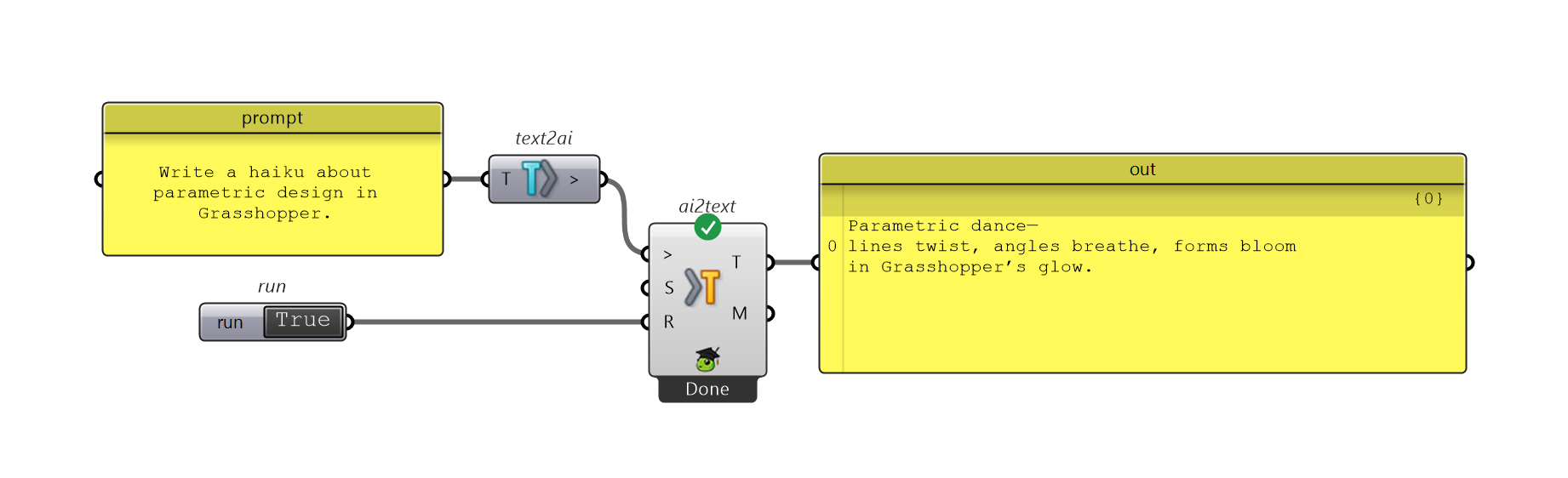
Composable *2AI inputs and AI2* outputs embed AI inside your data trees — merge prompts, images, files and canvas state into a single call and get typed Grasshopper data back, no string parsing.
 scroll zoom · drag pan
Agentic canvas assistant
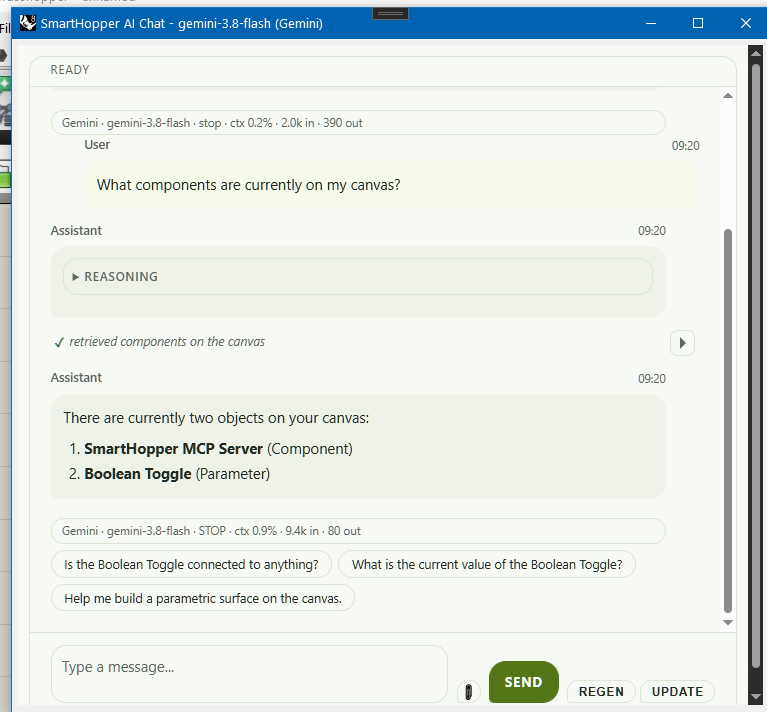
Click the AI button and chat with an assistant that sees your components, wires and errors. Every canvas edit is staged for your review — and undo-safe.
 scroll zoom · drag pan
Built-in MCP server
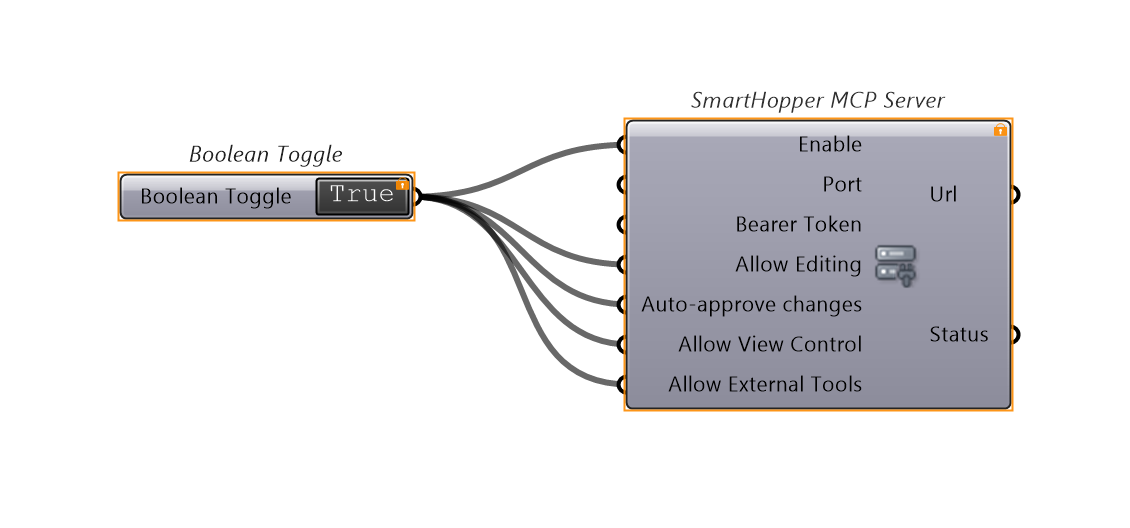
Expose your canvas to Claude, Codex, Cursor or VS Code through a local, token-protected MCP endpoint — the same reviewed tool calls the assistant uses.
 scroll zoom · drag pan
Native parametric components
Composable *2AI inputs and AI2* outputs embed AI inside your data trees — merge prompts, images, files and canvas state into a single call, get typed Grasshopper data back.
docs ↗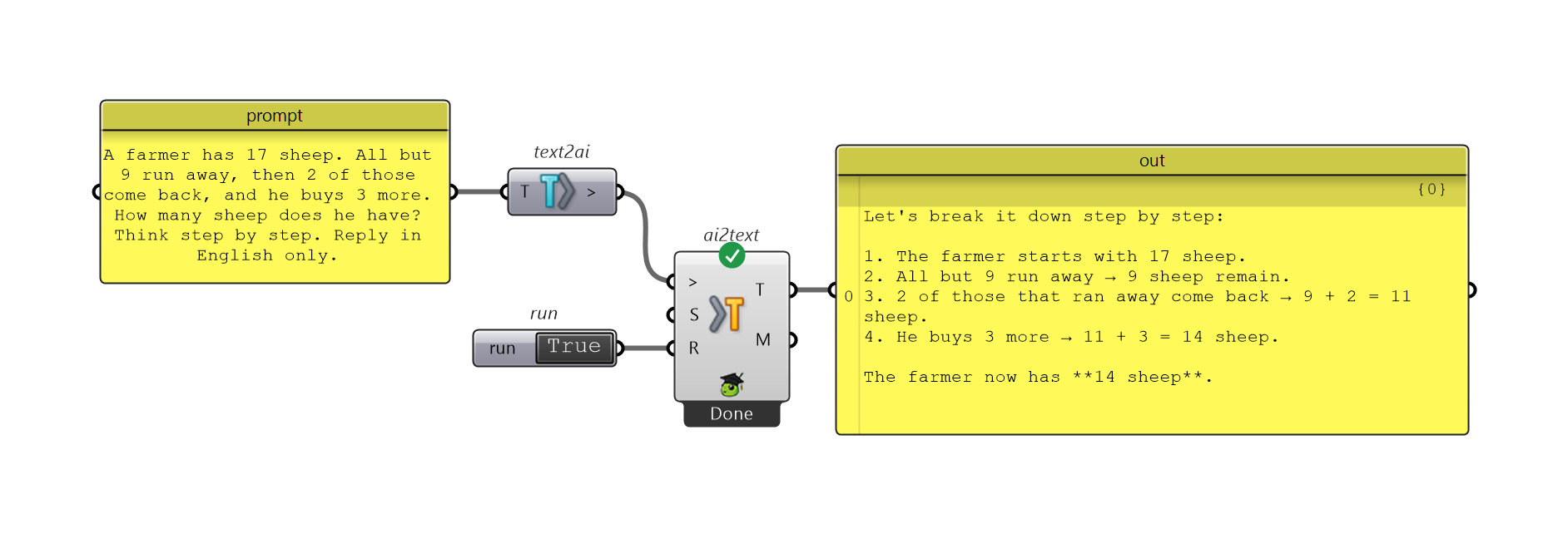 scroll zoom · drag pan
AI Scripting
Generate, edit and review Python, C#, VB.NET and IronPython script components. The AI sees inputs, outputs and errors.
docs ↗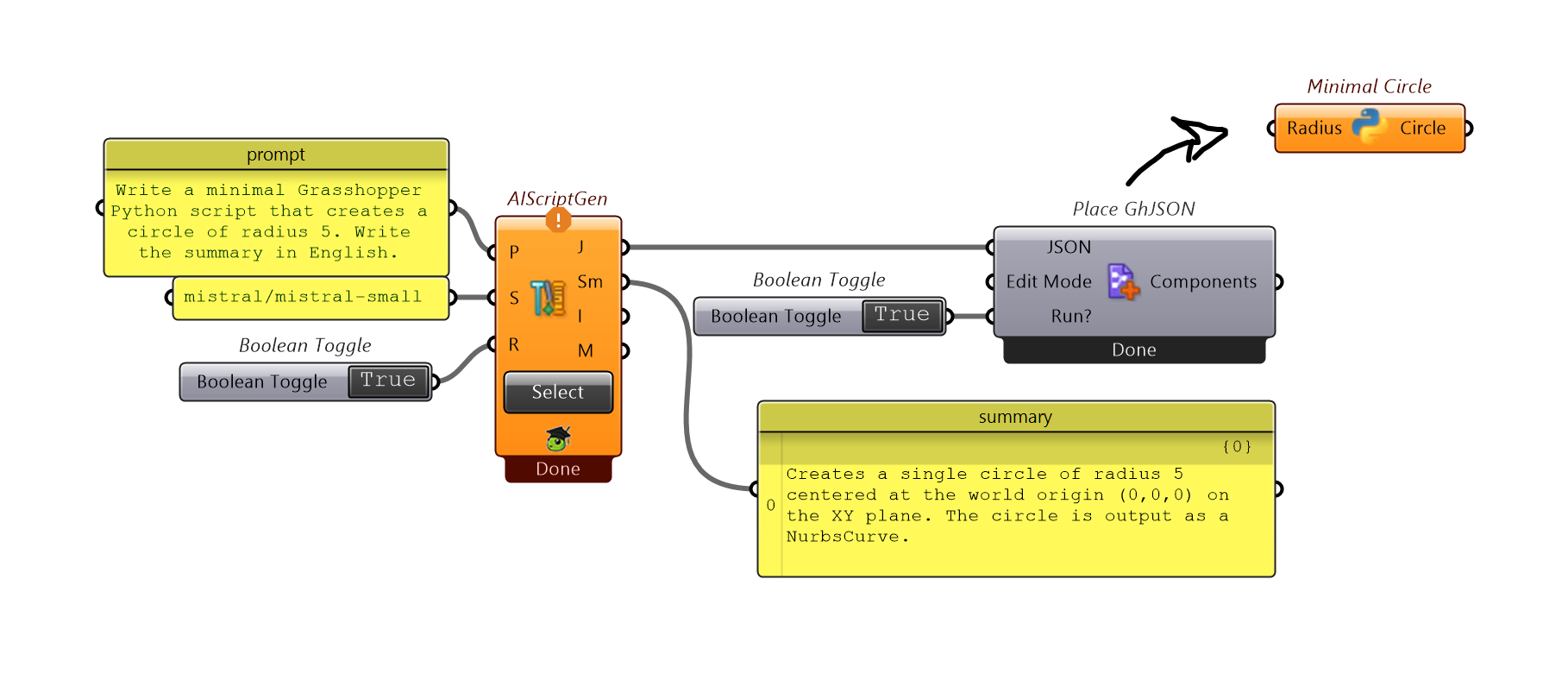 scroll zoom · drag pan
Knowledge & files
McNeel and Ladybug forums, any Discourse community, web pages, PDFs and Office files — ingested as clean Markdown context for the AI.
docs ↗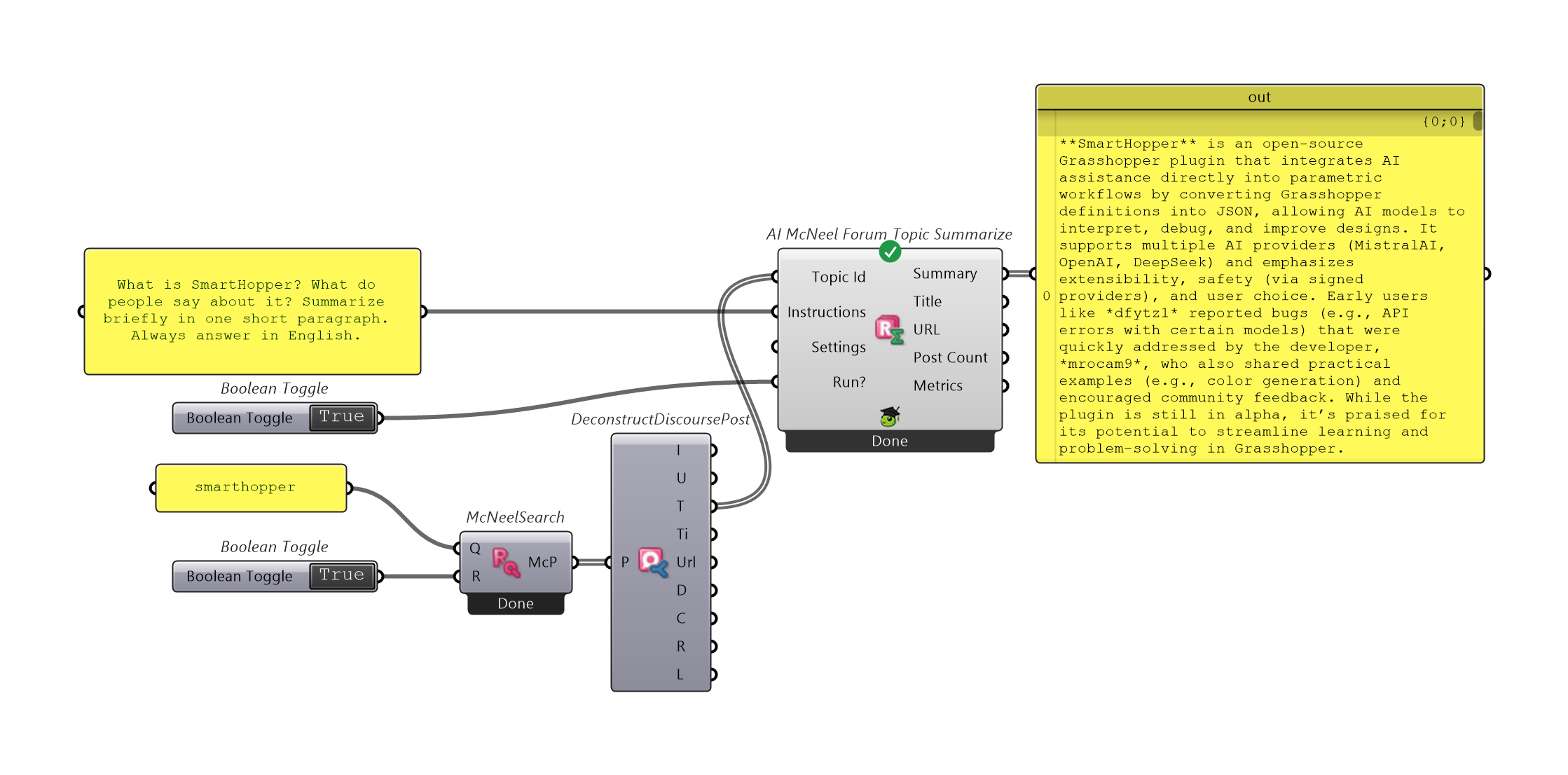 scroll zoom · drag pan
Media & Vision
Image generation, image description, canvas and viewport screenshots, audio transcription and speech — all as Grasshopper data.
docs ↗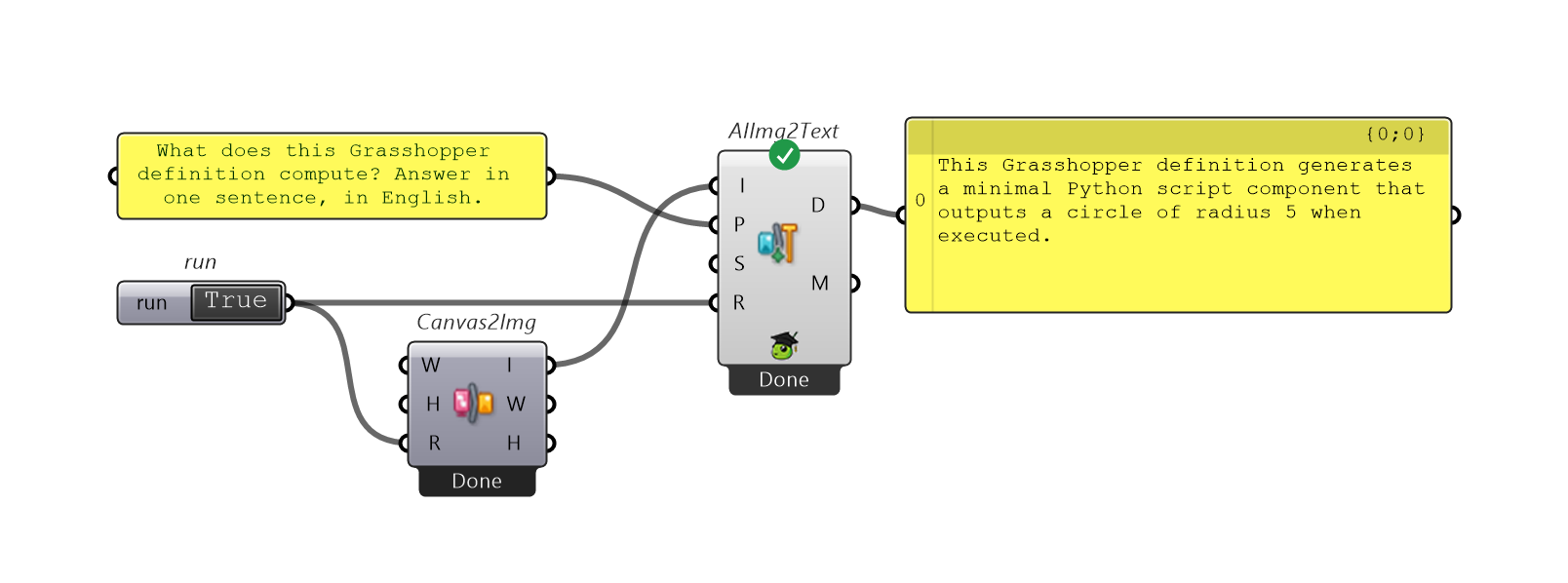 scroll zoom · drag pan
Chat with an AI
inside your canvas.
Click the button in the corner of the Grasshopper canvas and talk to an assistant that actually sees your work — components, wires, errors — and can build on it when you ask.
Every edit is staged and reviewable. Multi-document aware. Undo-safe.
scroll zoom · drag panGhJSON — your
definition, as text.
GhJSON serializes a Grasshopper definition to a readable plain-text format — diff it in git, merge branches, apply AI-generated patches, and version-control parametric work like code.
It is the bridge that lets AI read and write your canvas — and SmartHopper is its home: the open spec is created and maintained here.
MCP — let external
agents drive Grasshopper.
SmartHopper exposes its tool set as a local Model Context Protocol server — connect Claude, Codex or any MCP client and let it operate your canvas through the same reviewed tool calls.
Localhost only. Token-protected. Edits staged for review. Every change undoable.
+ tokengate
SERVERinside Grasshopper
TOOLSsame tool set
Open source —
always. LGPL.
SmartHopper is free and open source under LGPL-3.0 — and it always will be. The code, the tools, the GhJSON spec: all public, all inspectable.
Fork it, audit it, build on it. Your definitions and your providers stay yours.
Group
The interactive map could not be loaded — browse the tool list below:
Install in
three steps.
Stable builds ship through the Rhino Package Manager. Experimental builds land on GitHub Releases first.
full install guide ↗_PackageManager in Rhino 8, enable the Include prereleases option, and install SmartHopper.ollama or localai locally, free and private. openai
 anthropic
 mistral
 deepseek
 Ollama
The easiest local runner — one installer, any open model. Fully private, no API key, no usage cost.
 LocalAI
The open-source, drop-in OpenAI alternative — run it yourself for a fully private, key-free setup.
 Google Gemini
Google AI Studio issues a free API key with generous limits — fastest way to try cloud AI.
 OpenRouter
Free-tier open models through OpenRouter — frontier-class models with provider-set rate limits.
- Your own API key — requests go straight to the provider you picked. Keys are stored encrypted on your system.
- Local models — with Ollama or LocalAI, your work never leaves your machine.
Built for the community —
will you help?
Every great innovation starts with a single contribution. Whether you're reporting bugs, suggesting features, contributing code, sharing example definitions and workflows, or creating tutorials — your voice matters.